


The transformation of the Agribusiness Development Centre into dfcu Foundation marked the beginning of a broader ambition to empower entrepreneurs, strengthen agribusinesses and deepen financial inclusion across Uganda. Twelve months later, the organisation is taking stock of its progress. In an interview with Business Focus, dfcu Foundation Executive Director, Mabel Ndawula, shares the milestones achieved, the impact of flagship programmes such as the Financial Expansion for Agribusiness Transformation (FEAT), the challenges encountered, and the Foundation’s plans to scale its support for farmers, MSMEs, women and youth in the years ahead.
Q: One year ago, the Agribusiness Development Centre (ADC) transitioned into the dfcu Foundation, marking a significant shift in mandate. Looking back, what would you consider the Foundation’s biggest achievements?
A: The transition from the Agribusiness Development Centre to dfcu Foundation represented much more than a name change. It marked the evolution of our work from an agribusiness-focused institution into a broader development platform supporting enterprise development across agribusiness, trade and business sectors, financial inclusion, and institutional strengthening. Our first year has been encouraging. We reached more than 15,000 entrepreneurs and individuals across Uganda, strengthened the capacity of 677 micro, small and medium enterprises (MSMEs), and facilitated Shs37.17 billion in financing to help businesses grow and become more resilient. We also made important strides in advancing financial inclusion by supporting the opening of 834 new bank accounts and designing a catalytic fund model that will be piloted in 2026 to unlock financing for underserved enterprises. Beyond enterprise development, environmental sustainability has remained a priority. We distributed and supported the planting of 62,000 indigenous fruit and tree seedlings among farming communities while simultaneously strengthening strategic partnerships and putting in place governance and institutional frameworks that position the Foundation for sustainable long-term growth.
Q: Those are impressive numbers. Beyond the statistics, what do they tell you about the Foundation’s contribution to Uganda’s economic transformation?
A: They demonstrate that enterprise development goes far beyond providing financing. Entrepreneurs need knowledge, mentorship, stronger governance systems, market access and financial discipline if they are to build resilient businesses. Every business we strengthen creates opportunities for employment, improves household incomes and contributes to local economic growth. When we improve the capacity of MSMEs and farmers, we are helping build stronger communities and supporting Uganda’s broader economic transformation. That is the impact we are striving for—not simply financing businesses, but helping them become sustainable enterprises that can thrive over the long term
Q: The Financial Expansion for Agribusiness Transformation (FEAT) programme has become one of the Foundation’s flagship initiatives. How has it performed over the past year?
A: FEAT has made excellent progress in its first year. The programme reached 8,569 beneficiaries and provided practical support that is helping farmers and agribusinesses become more productive, financially resilient and market-ready. Through 1,120 training sessions conducted across 201 enterprise groups, we directly trained farmers in financial literacy, enterprise development, governance, agronomy, climate-smart agriculture and digital skills. We also organised intensive enterprise development boot camps that benefited 1,364 participants, equipping them with stronger business management capabilities. Financial inclusion has equally been a major success. Participants opened dfcu Bank accounts, while a significant share of the credit financing facilitated by the Foundation (disbursed by dfcu Bank and Rabo Foundation) during 2025 was extended to FEAT beneficiaries, enabling them to invest in expanding their enterprises. What is particularly encouraging is the programme’s inclusive nature. Women account for 60% of beneficiaries while youth represent 42%, ensuring opportunities reach groups that are central to Uganda’s agricultural transformation agenda. Another important achievement has been strengthening resilience within agricultural value chains. We delivered specialised Price Risk Management training to 40 coffee and cocoa enterprises, equipping them with practical skills to better manage market volatility and protect their incomes. The programme also invested in local support systems by revamping three e-learning hubs that served 170 learners and training 20 Community-Based Trainers through a Training-of-Trainers model. Working alongside our Business Advisors, these trainers are extending technical knowledge directly into farming communities.
Q: Every development programme is ultimately judged by the lives it changes. Which beneficiary stories best capture the Foundation’s impact?
A: We have witnessed many inspiring stories over the past year. One example comes from Buliisa under the FEAT programme, where the NOK-NOK Savings Group retained and grew 87.5% of its mobilised capital after receiving training while significantly strengthening its governance and savings culture. Another success story is the Kikube Development Farmers Association, which transformed from a Village Savings and Loan Association into a registered cooperative. Through governance and financial literacy support, their membership increased by 44% within just one year. At the enterprise level, one remarkable example is Joanitah Bithwa from Bulambuli, who participated in the 10X Programme for Digitally Empowered Women Entrepreneurs, implemented by dfcu Foundation in partnership with Outbox Uganda. With business development support and digital capacity building, her family’s maize milling business experienced extraordinary growth. Production capacity increased by 900%, daily sales rose by 286%, and the workforce doubled. This clearly demonstrates how the right combination of business support and digital inclusion can accelerate enterprise growth, create jobs and improve livelihoods.
Q: Every young organisation encounters challenges. What obstacles did the Foundation face during its first year and how did you respond?
A: Naturally, there were challenges. The transition from ADC to dfcu Foundation delayed the commencement of field activities in 2025, while the political season later in the year also disrupted implementation in some areas. We responded by deploying Community-Based Trainers to accelerate outreach and ensure services continued reaching communities efficiently. Another challenge was the relatively low uptake of our digital learning platforms because of limited smartphone ownership and digital literacy gaps. To address this, we strengthened Community-Based Trainer support while partnering with training and vocational institutions to improve access to computers and digital skills. As we continue expanding our impact, resource mobilisation remains an important priority. We are actively pursuing strategic partnerships and funding opportunities that will allow us to deepen and scale our interventions.
Q: Partnerships appear central to your strategy. How important have they been in delivering results?
A: Partnerships have been fundamental to our success. Working with government agencies, local governments, development partners, training institutions and private sector organisations has enabled us to extend our reach, strengthen enterprise development, improve financial inclusion and provide more targeted support to farmers and MSMEs. These collaborations allow us to combine expertise, technology and resources, making our programmes more effective and sustainable. More importantly, they help us build stronger ecosystems that continue creating opportunities for entrepreneurs, women, youth and farming communities long after individual interventions have ended.
Q: Digital transformation is reshaping enterprise development globally. How has technology strengthened the Foundation’s programmes?
A: Technology is becoming increasingly important in extending quality business support to entrepreneurs who might otherwise be difficult to reach. Our SOMA e-learning platform has continued to grow, recording 812 registered users, 247 course enrolments and 115 course completions during 2025. The platform offers self-paced learning covering agronomy, governance, climate-smart agriculture, financial literacy, digital skills and enterprise development, allowing users to access training wherever they are. We have also enhanced the platform through improved user segmentation, automated email and SMS notifications, and full integration with dfcu systems. These enhancements deliver a more seamless and personalized learning experience while strengthening the platform’s scalability and flexibility. Technology has also strengthened market access. Through the Bean Book Digital Marketplace, a price risk management platform, we onboarded 25 enterprises and facilitated 57 coffee trading contracts covering approximately 4,500 metric tonnes of coffee. Beyond facilitating trade, the platform provides market intelligence, price risk management tools and data-driven insights that improve business competitiveness and resilience. These digital innovations complement our traditional face-to-face engagements and enable us to reach more beneficiaries while improving access to markets, knowledge and business opportunities.
Q: After one year, what would you say have been the Foundation’s biggest lessons?
Perhaps our biggest lesson is the validation that sustainable development works best when communities own the process. Working through organised groups, local leaders and Community-Based Trainers has significantly improved participation, knowledge transfer and long-term impact, particularly among women and youth. We also recognize that financial literacy is about much more than knowledge—it changes behaviour. Many farmers who participated in our programmes are now saving more consistently, budgeting more effectively and making better financial decisions. Rather than selling produce immediately after harvest, many are waiting for better market prices, leading to improved incomes. Another important lesson is the value of partnerships. Collaborating with government, development partners, financial institutions and local organisations has enabled us to expand our reach while strengthening digital and financial literacy. Finally, 2025 reinforced the importance of innovation and adaptability. Combining digital platforms, upgraded learning hubs and personalized enterprise support is proving essential if we are to reach more Ugandans and deliver lasting impact.
Q: Looking ahead, where do you see the greatest opportunities for supporting farmers, MSMEs, women and young entrepreneurs?
A: We see tremendous opportunities for expanding access to finance, markets, digital skills and enterprise development. The rollout of our Catalytic Fund, together with continued implementation of FEAT and expansion of our digital learning platforms, will enable many more entrepreneurs to build resilient and competitive businesses. We are equally excited about the opportunities in agro-industrialisation, climate-smart agriculture and green enterprise development, all of which have the potential to create jobs, unlock new markets and generate sustainable incomes. Through stronger partnerships with government, educational institutions, development partners and the private sector, we intend to reach even more underserved communities while equipping women and young people with the skills, financing and opportunities they need to succeed.
Q: Finally, what should stakeholders expect from dfcu Foundation in its second year and beyond?
A: Our focus is aimed at scaling impact through three strategic priorities: enterprise development, expanding financial access and environmental sustainability. We will continue supporting entrepreneurs, MSMEs and agricultural value chains—including coffee, dairy, cereals and oilseeds—with the skills, market linkages and business networks needed to grow resilient enterprises. Financial inclusion will remain at the centre of our work. Through business training, mentorship, technical assistance, digital tools and the rollout of our Catalytic Fund, we will strengthen the bankability of agribusinesses and MSMEs, helping promising enterprises become investment-ready and access affordable growth capital. At the same time, we will expand our environmental sustainability initiatives, particularly our tree-growing programme, to promote climate resilience and sustainable livelihoods. Ultimately, our ambition is to build resilient enterprises, deepen financial inclusion, improve market access, create jobs and contribute meaningfully to Uganda’s long-term economic transformation while positioning dfcu Foundation as a catalyst for inclusive and sustainable growth.
In the Old Testament, Moses is asked a simple question: “What is that in your hand?” His answer is equally simple: “a staff”. An ordinary tool, familiar and easy to overlook.
Yet, when placed in the service of a greater purpose, that ordinary staff became an instrument of extraordinary change. It was used to demonstrate authority, guide people through uncertainty, and unlock possibilities that once seemed impossible.
The lesson extends far beyond the biblical story. What we hold matters, but what we are empowered to do with it matters even more.
At dfcu Foundation, this principle shapes how we view digital technology. A computer, on its own, is equipment; a screen, a keyboard and processing power. But in the hands of a learner, entrepreneur, farmer, innovator or public servant, it becomes a tool for transformation. It can open a classroom, connect a business to markets, strengthen decision-making, and turn ideas into opportunity.
This thinking informed our recent partnership with dfcu Bank and the Ministry of ICT and National Guidance, through which 100 computers were donated to support innovation hubs and digital learning centres across Uganda. The true significance of this initiative lies not in the devices themselves, but in what people will be able to achieve with them.

Helena Mayanja, Dr. Aminah Zawedde and Mabel Ndawula during the handover of the computers at the Ministry of ICT & National Guidance Innovation Hub in Nakawa.
Digital inclusion cannot be measured by the number of devices distributed alone. A computer sitting idle does not close the digital divide. Transformation happens when access is combined with practical skills, relevant content, mentorship and opportunities to apply knowledge in meaningful ways.
That is why digital investments should ultimately be judged by outcomes: improved employability, stronger and more efficient businesses, better decisions and locally relevant innovations.
“Technology creates its strongest impact when it is connected to a real need and gives people the confidence to act.”
This philosophy has guided dfcu Foundation’s digital-learning journey for years. Through our Remote Training Kits, we have delivered more than 241 virtual training sessions to over 5,000 participants, extending business and agricultural advisory services to communities, including hard-to-reach areas. SOMA, our free self-paced e-learning platform, has logged 20,333 learners since inception, providing practical content in financial literacy, entrepreneurship, governance, digital skills and climate-smart agriculture, among others. Through Digital Learning Hubs in Kampala, Kyotera and Buikwe, additional learners and entrepreneurs have gained access to skills development opportunities.
Similarly, BeanBook, a price risk management platform, demonstrates how technology can solve sector-specific challenges. Developed for coffee SMEs and cooperatives, it combines market intelligence, transaction analysis and price-risk management tools to help users respond to price volatility, make better trading decisions and strengthen participation in local and export markets.
Across these initiatives, one principle remains constant: technology creates impact when it is connected to a real need and enables people to act with greater confidence and capability.
This matters because Uganda’s economic ambitions increasingly depend on digital capability. Whether in agriculture, tourism, industry, innovation or services, productivity and competitiveness will increasingly be shaped by how effectively people use technology to solve problems and create value.
But inclusion must remain central to this agenda. If young people, women, rural communities and smaller enterprises lack access to digital tools and skills, Uganda risks leaving a significant share of its talent and potential untapped. The challenge is not simply to bring more people online, but to enable more people to participate meaningfully in the digital economy.
Achieving this requires partnership. Government provides policy direction and public infrastructure. The private sector contributes investment, technology and market expertise. Educators build skills, while development partners and communities help ensure solutions remain relevant and scalable.
At dfcu Foundation, we believe our role extends beyond financing. Sustainable enterprise growth requires knowledge, skills, market access and the confidence to embrace new opportunities. Since inception, the Foundation has reached more than 78,000 individuals, supported over 2,900 enterprises and facilitated access to more than USD 39.5 million in financing. These outcomes reinforce a simple belief: transformation happens when tools are supported by knowledge, opportunity and purpose.
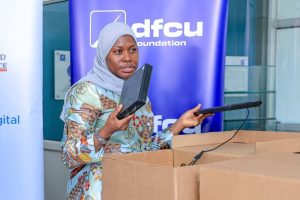
Dr. Aminah Zawedde, Permanent Secretary at the Ministry of ICT and National Guidance, demonstrates one of the 100 desktop computers donated by dfcu Foundation in partnership with dfcu Bank.
Ultimately, the success of the 100-computer donation will not be measured by the donation ceremony. It will be seen in the young person who gains a marketable skill, the entrepreneur who grows a business, the farmer who makes a better commercial decision, and the innovator who develops solutions to local challenges.
Uganda already possesses many of the ingredients needed for progress: a young and enterprising population, innovative communities, supportive institutions and a growing digital ecosystem. The question is whether we can bring these assets together around a common purpose.
A computer is equipment. But when placed in capable hands, connected to knowledge and directed towards a real need, it becomes far more than a device. It becomes a gateway to opportunity.
Just like the staff in Moses’ hands, its transformational power is revealed not by what it is, but by what people are enabled to do with it.
Source: CEO East Africa Magazine – Just Like Moses’ Staff, A Computer Is Equipment That Becomes A Tool for Transformation
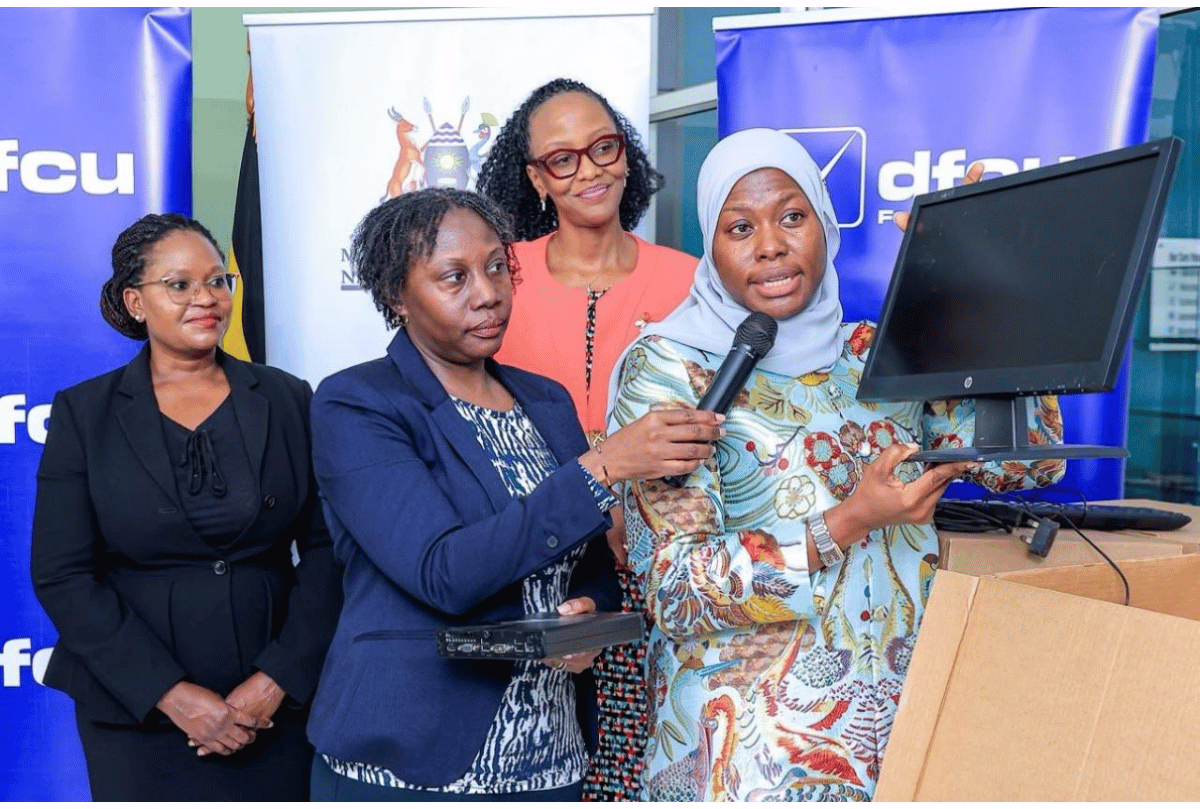
dfcu Bank, through the dfcu Foundation, has donated 100 desktop computers to the Ministry of ICT and National Guidance, accelerating efforts to expand digital access, strengthen digital skills and create new opportunities for young people, women entrepreneurs and underserved communities across Uganda.
The computers, handed over at the National ICT Innovation Hub in Nakawa, will be distributed to selected schools across the country, helping learners gain access to technology and digital learning resources. The donation marks a significant milestone in the partnership between the dfcu Foundation and the Ministry of ICT and National Guidance, established in November 2024 to advance Uganda’s digital transformation agenda through digital literacy, entrepreneurship development, innovation and financial inclusion.
Beyond improving access to technology, the partnership is already delivering practical support to Uganda’s growing innovation ecosystem. More than 200 innovators have participated in financial literacy and business management training programmes delivered through the National ICT Hub, while selected entrepreneurs have received mentorship to strengthen business planning, record keeping and investment readiness.
The partnership has also expanded access to the Foundation’s SOMA digital learning platform, which offers self-paced courses in financial literacy, governance, leadership and business management. The platform is expected to be rolled out to regional innovation hubs, extending learning opportunities to entrepreneurs and innovators beyond Kampala.
Speaking on behalf of dfcu Bank Chief Executive Officer Charles Mudiwa, Head of Corporate Affairs and Sustainability Helena Mayanja said access to technology is increasingly becoming a requirement for participation in modern economies.
“We are grateful to the Ministry for its leadership and partnership in creating opportunities for more Ugandans to participate in the digital economy. Many of the opportunities that shape the future begin with access to knowledge, technology and skills. Through this donation, we are investing in that foundation and helping young people gain the tools they need to learn, innovate and build sustainable livelihoods. This partnership demonstrates the impact that can be achieved when the private sector and government work together around a common purpose.”
dfcu Foundation Executive Director Mabel Ndawula said the initiative reflects the Foundation’s commitment to equipping people with capabilities that can drive long-term economic participation.
“Digital inclusion is not only about access to technology; it is also about ensuring people have the skills and confidence to use it effectively. By combining digital literacy, entrepreneurship development and financial education, we are helping more Ugandans unlock economic opportunities and build resilient businesses. We look forward to growing this partnership and extending its reach to even more communities.”
Receiving the donation, Permanent Secretary at the Ministry of ICT and National Guidance Dr. Amina Zawedde said the handover demonstrates the progress being made under the partnership signed between the Ministry and dfcu Foundation in 2024.
“Today, we are seeing a shared commitment translated into action. These 100 desktop computers will provide learners and educators with access to technology and digital resources that are essential for education, innovation and skills development. Government cannot achieve Uganda’s digital transformation ambitions alone. Partnerships such as this one are critical to ensuring that more Ugandans benefit from the opportunities being created by the digital economy.”
Dr Zawedde noted that the initiative directly supports the objectives of the National Development Plan IV, particularly in strengthening human capital development and ensuring inclusive access to opportunities.
She added that digital literacy is increasingly essential across all sectors of the economy, enabling farmers, entrepreneurs and communities to access market information, weather updates, digital financial services and other tools that improve productivity and economic participation.
Dr. Zawedde noted that the partnership supports Uganda’s Digital Transformation Roadmap by expanding digital infrastructure, strengthening digital skills, supporting innovation and advancing financial inclusion.
As dfcu continues to transform lives and businesses, the Bank remains committed to partnerships that create sustainable impact and unlock opportunities for communities across Uganda.
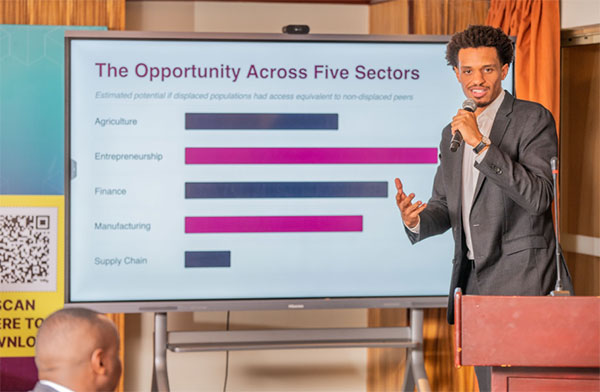
The Amahoro Coalition on Thursday released a research report, “Hiding in Plain Sight: Africa’s $27B Displacement Market Opportunity”, that documents the economic scale of displacement across Africa and the commercial case for private sector investment in displacement-affected communities.
The report’s central finding is striking, as it indicates Africa’s displaced population generates income that is equal to an economy the size of Uganda’s GDP in the 2010s, and Zambia’s today.
All this, yet this population operates almost entirely without the financial infrastructure that any comparably sized economy would take for granted: no banking sector, no formal retail chains, and no structured access to credit.
“Africa’s displaced communities are not waiting for rescue. They are running businesses, farming land, and moving goods across borders, with almost none of the financial infrastructure available to everyone else. That gap is where the opportunity is” says Tito Mbathi, Head of Partnerships, Amahoro Coalition.
The report maps investment potential across five sectors: entrepreneurship, agriculture, finance, supply chain, andmanufacturing, withh primary data, market sizing, and case studies drawn from working models already generating commercial returns.
In partnership with dfcu Bank, one of Uganda’s leading financial institutions, Amahoro Coalition is working to translate the report’s findings into concrete financial products and pathways for displaced entrepreneurs across Uganda’s settlement corridors. dfcu Bank’s 57-branch network and established agribusiness and SME portfolio make it uniquely positioned to reach the displacement economy this report documents.

Maryann Wanjiku Michuki, Chief Business Solutions & Marketing Officer reacts to the report details.

“At dfcu, we believe financial inclusion must extend to every enterprising community with the ambition and ability to build sustainable livelihoods. This report reinforces what we see across Uganda: displaced people are not only participants in the economy, they are entrepreneurs, farmers, customers, and partners in growth. Through our work with Amahoro Coalition, we are committed to supporting practical financial solutions that unlock access to credit, markets, and enterprise development for refugees and host communities alike,” Maryann Wanjiku Michuki, Chief Business Solutions & Marketing Officer.
Uganda: The Clearest Proof Point in Africa
Uganda hosts more refugees than any other country in Africa, over 1.7 million people, and its land-based self-reliance model has become the continent’s most cited example of what is possible when policy creates the conditions for economic participation. Uganda demonstrates that the constraint on displaced people’s economic participation is not capacity or willingness, it is access. Where land, credit, and market linkages have been unlocked, commercial viability has followed.
The Scale of the Invisible Nation
Kyangwali settlement is home to 83,558 refugees, more people than Uganda’s internationally known city of Entebbe. Yet Kyangwali is rarely recognized as an economy in national statistics or investment strategies. Most of Africa’s displaced live, economically speaking, off the grid. This invisibility is the product of documentation requirements, regulatory frameworks, and financial systems designed for settled populations, systems that exclude displaced people not because of any economic failure on their part, but because the systems were never designed to include them. The report argues that these design failures are, for first-mover investors, the opportunity.
Facts about Uganda
Key Findings of the report
Source: The Independent – Africa’s 43 million displaced people generate $27 billion a year
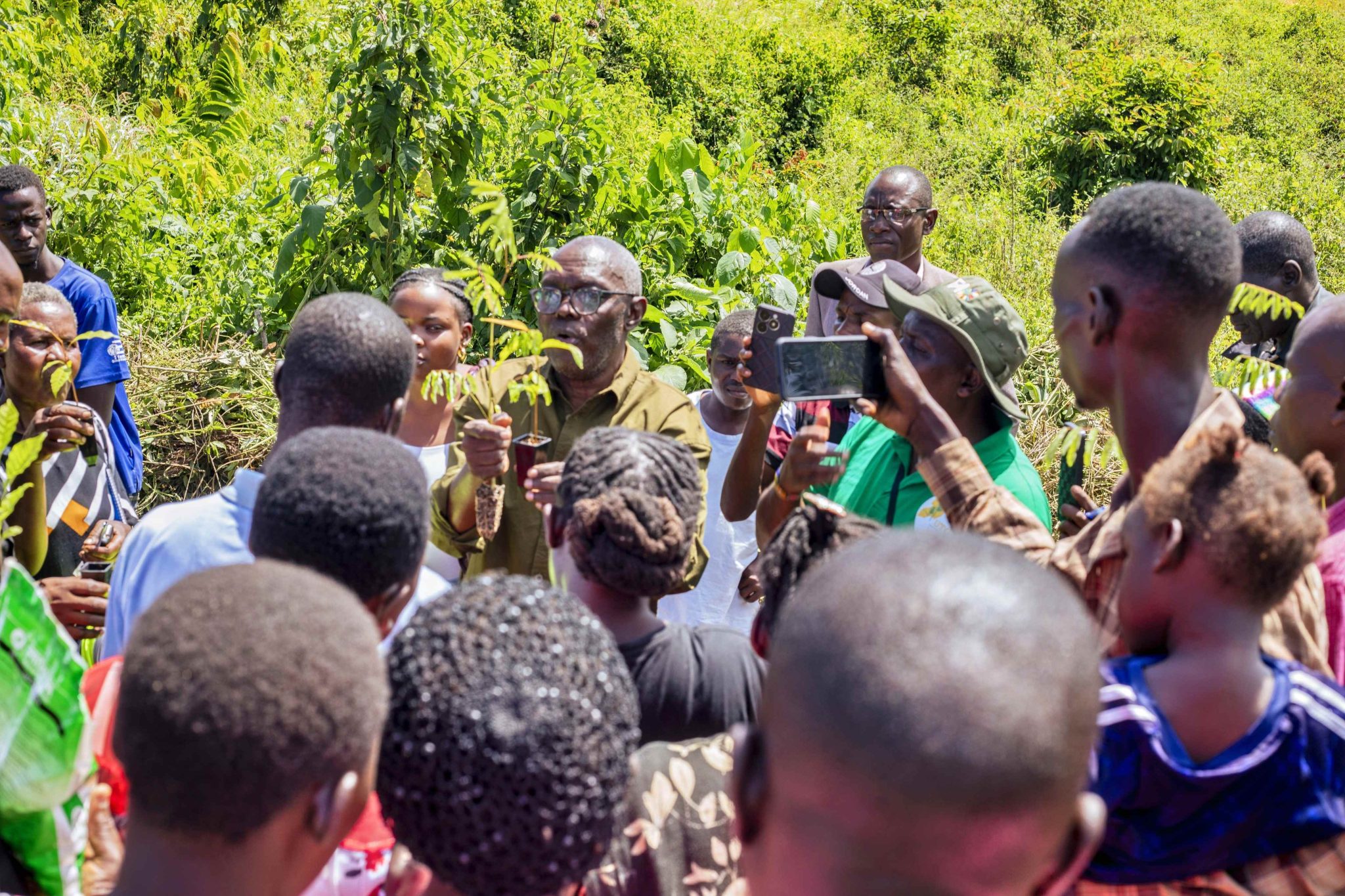
dfcu Bank, through its impact arm, dfcu Foundation, in partnership with the Uganda Timber Growers Association (UTGA), commemorated World Environment Day with a tree planting and grower training initiative at Ntakanfunvu, Mukono. This activity forms part of dfcu Foundation’s broader sustainability agenda under its Tree Planting and Promotion Program (T3P), which integrates environmental stewardship with enterprise development, underscoring the Bank’s deliberate focus on climate resilience, sustainable livelihoods, and green economic growth.
Through its sustainability strategy, dfcu Foundation is championing a long-term vision to grow over 500,000 trees by 2029—contributing to carbon sequestration, biodiversity restoration, and increased income streams for farmers—while already demonstrating strong progress with over 62,000 trees planted and distributed in 2025, reflecting the Bank’s commitment to moving beyond tree planting toward tree growing with lasting impact. This World Environment Day activity directly contributes to that target, with more than 80 trees planted, while reinforcing the importance of nurturing trees to maturity for both environmental and commercial value.
The partnership between dfcu Bank and UTGA is central to achieving these outcomes, combining financial expertise from dfcu Foundation with UTGA’s technical forestry knowledge to support tree growers with both sound business skills and sustainable forestry practices. This collaboration ensures that farmers go beyond simply planting trees to managing forestry as viable enterprises—improving productivity, strengthening resilience to climate shocks, and increasing access to financial services.
Dr. James Ssemwanga, Chairperson of UTGA and dfcu Foundation Boards, emphasized the dual importance of environmental conservation and wealth creation:
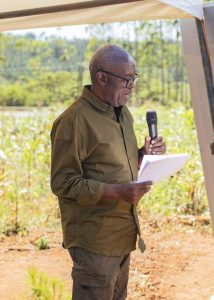
“We have the potential to create wealth and sustain it through the timber business while protecting the environment… We must grow and nurture trees that hold long-term value.”
This initiative is critical in addressing Uganda’s growing climate challenges, including deforestation, land degradation, and income vulnerability among rural communities. By linking tree growing to enterprise development, dfcu is helping build sustainable, climate-smart livelihoods. Through programs like T3P, the Bank is also aligning with its broader mission of enhancing the bankability and long-term viability of agribusinesses, ensuring that sustainability is not only environmental but also economic and social.
The day’s activities focused on equipping tree growers with practical skills to strengthen both their businesses and sustainability practices. Participants received financial literacy training facilitated by dfcu Foundation, covering key areas such as budgeting, record keeping, savings, and access to credit, all critical for improving enterprise performance and long-term viability. At the same time, UTGA provided technical guidance on sustainable forestry practices, helping farmers enhance productivity and manage their woodlots more effectively.
Ms. Sharon Kalanzi, Business Advisor Central at dfcu Foundation, highlighted the role of financial discipline in forestry enterprises, noting that improved financial management enhances profitability, sustainability, and access to financing.
The event also marked the culmination of a series of UTGA regional cluster meetings held across Uganda. By embedding sustainability into its core operations and partnerships, dfcu Bank continues to position itself as a leader in financing inclusive, climate-resilient growth, while empowering communities to thrive economically and environmentally.

dfcu Bank and MTN Uganda on Thursday launched the second phase of their Advancing Women Entrepreneurs (AWE) programme after unlocking 62 billion Ugandan shillings ($16.8 million) in contracts for women-led businesses under the initiative’s first phase. The AWE 2.0 programme will focus on expanding financing, training and procurement opportunities for women-owned enterprises, particularly in Uganda’s technology and infrastructure supply chains.
Margaret Karume, chief credit officer, dfcu bank said the first phase of the programme demonstrated strong uptake but also highlighted the persistent challenge of limited access to finance, markets and business networks.
“What many of these women lacked was not ambition, because they had the ambition, but access,” Karume said. “Access to markets, access to structured business knowledge, to networks, access to finance, and also access to confidence-building ecosystems that help businesses move from survival to sustainable growth.”
She said dfcu had set aside 30 billion shillings for financing over three years and had already disbursed 2 billion shillings in loans to 19 businesses under contract financing following the March 2024 launch of the first cohort. Karume added that the bank had opened 90 accounts for participants, including 71 business accounts, and helped mobilise about 5 billion shillings in deposits. She said the next phase would focus on helping women entrepreneurs transition from informal activity into structured, scalable enterprises capable of attracting investment and winning larger contracts.
“Many entrepreneurs begin with passion and the hassle, but as they grow, structure becomes essential for a business,” Karume said. “You need proper financial records, sound systems, digital tools, procurement readiness, governance, compliance with the laws and regulations of the land, and confidence to sit across the table from corporate customers and investors and say, my business is ready.”
Sylvia Mulinge, CEO MTN Uganda said the programme was designed to address a supplier inclusion gap in sectors where the telecoms firm spends heavily, including fibre rollout, network infrastructure and IT services. She said MTN Uganda had increased the share of women-led suppliers in its ecosystem from 0.3% to 15% since the programme began in 2023, alongside 62 billion shillings in contracts awarded to women-owned businesses.
“When I see all women who have stood here, I’m not just seeing women, I’m seeing businesses, I’m seeing businesses that are employing people, I’m seeing lives that are being raised,” Mulinge said.
She said more than 1.6 billion shillings in financing had also been extended to women-led enterprises. Mulinge cautioned, however, that businesses must still compete on equal terms in pricing, technical capacity and delivery.
“We can open the way for you,” she said. “But if you don’t come and compete in terms of price, in terms of technical capability, as all the rest of the other male-owned businesses, it should be difficult for us to keep.”
Mabel Ndawula, executive director dfcu Foundation said the programme’s financial management training would focus on building disciplined, sustainable business practices, including proper record keeping and separation of personal and business finances.
“We need to get you to a point where there’s absolute distinction between business and family or owner cash,” Ndawula said. “Without this base, you cannot really become that bridge we’re looking at.”
She added that many small businesses still relied on manual bookkeeping systems and needed to adopt basic digital tools to improve efficiency and resilience.
“You cannot build a bridge with analog methodologies,” she said. “Even if it’s the most basic of automations, how can you do this on spreadsheets? It’s better than manual writing with a pen.”
Source: ChimpReports – dfcu, MTN Launch AWE 2.0 with Focus on Women-Led Tech Suppliers

The Ministry of ICT & National Guidance and the dfcu Foundation have today signed a strategic partnership aimed at accelerating digital skilling, innovation and enterprise transformation across Uganda. This collaboration brings together government leadership and private sector experience to equip entrepreneurs, youth, SMEs, women-led enterprises and community organizations with the digital tools and skills needed to thrive in today’s technology-driven economy.
Speaking at the signing ceremony, both institutions highlighted the importance of working together to advance Uganda’s digital ambitions. The Ministry—charged with driving the national digital agenda—will leverage its nationwide network of Innovation Hubs as key delivery points for the partnership. These hubs serve as centres for digital training, mentorship, creativity and community engagement. Through this partnership, they will be further strengthened to deliver practical digital skills, enterprise growth support and technology-enabled opportunities.
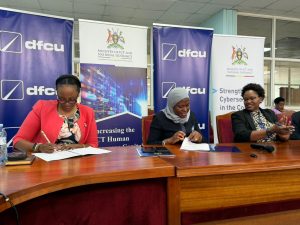
dfcu Group, through the dfcu Foundation and dfcu Bank, will complement this national infrastructure by contributing equipment, expertise and a long-standing commitment to enterprise development. dfcu Bank has pledged computers to the National ICT Innovation Hub, enabling young innovators and emerging digital professionals to access essential tools for learning, innovation and business development.
In addition, the dfcu Foundation, through its Business Acceleration Program, will work with the Ministry to co-create digital and enterprise skilling programmes covering financial literacy, business formalization, governance and leadership. The shared objective is to bridge digital gaps, stimulate enterprise growth and drive inclusive economic participation.
In her remarks, Dr. Amina Zawedde, Permanent Secretary of the Ministry of ICT & National Guidance, underscored the national importance of the initiative. “Our Innovation Hubs were established to nurture Uganda’s digital talent and expand access to ICT services. This partnership with the dfcu Foundation strengthens our ability to deliver on that mandate by expanding equipment, training and real-world enterprise support. When government and the private sector move together, we move the country forward.”
Representing dfcu Foundation, Mabel Ndawula, Executive Director, highlighted the shared purpose behind the partnership. “This collaboration is grounded in mutual respect and complementary strengths. The Ministry provides a strong national platform through its Innovation Hubs, while dfcu brings tools, enterprise support and deep experience working with SMEs, farmers, women and youth. Together, we are shaping a future where every Ugandan can participate meaningfully in the digital economy.”

Helena Mayanja, Head of Corporate Affairs & Sustainability at dfcu Bank, noted that the Bank’s contribution aligns with its long-standing role as a partner in Uganda’s progress. “This initiative reaffirms dfcu Bank’s commitment to building a stronger, more prosperous and sustainable Uganda. By equipping the Ministry’s Innovation Hubs with computers, we are helping ensure that digital transformation reaches communities across the country, not only those in urban centres.”
“Technology creates real impact when it enables innovators, entrepreneurs and young people to build resilient businesses and create long-term opportunities for themselves and their communities. Through this partnership, we are proud to support Uganda’s vision for a digitally skilled, inclusive and sustainable economy,” she added.
The partnership will expand digital skilling through the Ministry’s Innovation Hubs, improve access to enterprise development and extend digital literacy to grassroots entrepreneurs. It will also support national efforts to prepare Ugandans for opportunities in e-commerce, digital finance, innovation and ICT-driven business.
As the ceremony concluded, Mabel Ndawula reaffirmed the partners’ shared commitment: “This partnership unites the strengths of government and private sector with one shared goal: to unleash digital transformation and foster sustainable businesses in Uganda.”
Source: dfcu Bank – dfcu Foundation and Ministry of ICT & National Guidance Sign Strategic Partnership to Strengthen Digital Skilling and Innovation Across Uganda – dfcu Bank
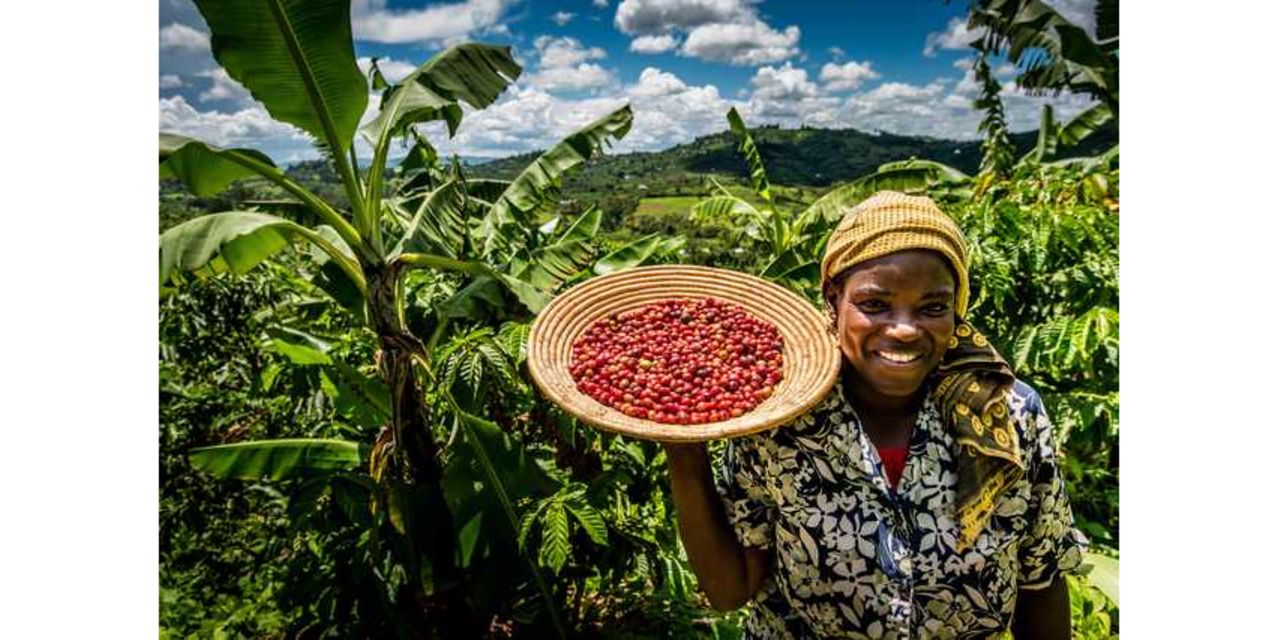
With support from the dfcu Foundation, female farmers will not just pick coffee beans but will plant the seeds of their family’s financial future. PHOTO | GEORGE KATONGOLE.
In a bid to unlock economic potential for smallholder farmers and agribusinesses, the dfcu Bank, under dfcu Foundation, has launched the Financial Expansion for Agribusiness Transformation (FEAT) Programme. This initiative, backed by the Rabo Foundation, is set to boost productivity and profitability for smallholder farmers and agribusinesses, with a special focus on women, youth, and vulnerable communities.
Economic impact
The programme’s ambitious goal is to support 2,280 agribusinesses and directly impact more than 100,000 individuals across key value chains, including coffee, dairy, cereals and oil seeds. FEAT also plans to train 80,000 learners, with 50 percent being women and 40 percent youth, a measure expected to reach more than 400,000 Ugandans based on the average household size. The FEAT programme is a direct response to the glaring gaps in Uganda’s agriculture sector. While farming employs more than 70 percent of the working population, and contributes about a quarter of the national GDP, the sector’s output is often limited by a lack of access to financial services, technology and essential skills.
The programme’s focus on women and youth is particularly critical. Despite being a major part of the agricultural workforce, women in Uganda often have less access to land ownership and credit, resulting in their farms being significantly less productive than those managed by men. Similarly, a high youth unemployment rate makes empowering young people with agribusiness skills a vital step toward creating a more vibrant and sustainable economy.
To drive financial sustainability, FEAT will avail Shs100b in financial linkages. A key component of the programme is the introduction of a revolving fund facility designed to support early-stage enterprises that are not yet ready for commercial credit. Alongside this, participants will receive capacity building in leadership, governance, financial literacy and climate-smart agriculture, delivered through management business advisors, AgriTech experts and digital platforms such as the dfcu Foundation’s SOMA e-learning platform.
Inclusive growth
Mabel Ndawula, the Executive Director of dfcu Foundation, emphasizes the programme’s collaborative mission. “At its heart, FEAT is a collaborative effort to unlock real opportunities for farmers and entrepreneurs—through access to finance, markets and skills,” she says. “The combined strength of Rabo Foundation’s global expertise and dfcu’s deep local commitment ensures smallholder farmers and Small and Medium-sized Enterprises (SMEs) can move from subsistence to prosperity, driving inclusive growth and resilient rural economies.” Dfcu Bank Chief Executive Officer Charles Mudiwa adds that the initiative is a natural extension of the bank’s mission.
“Through FEAT, we are not only expanding access to finance but also investing in the skills, technologies and partnerships that make agribusiness more competitive, resilient and inclusive. This programme reflects our long-term commitment to empowering farmers and positioning agriculture as a driver of sustainable national growth,” he says. Echoing the sentiment, Sonja Timmer, the lead Impact Finance, Africa at Rabo Foundation, notes that the FEAT programme builds on a long-standing partnership. “The FEAT programme reflects our shared belief that entrepreneurship in smallholder value chains is key to sustainable growth. FEAT is more than a programme: it aims to be a catalyst for change, equipping agri-entrepreneurs and farmers with training, tools and financial solutions to scale their businesses,” she says.
Source: The CEO – https://www.monitor.co.ug/uganda/magazines/farming/2-280-agribusinesses-to-benefit-from-shs100b-programme-5182308

dfcu Foundation has officially launched the Financial Expansion for Agribusiness Transformation (FEAT) Program, a strategic initiative designed to strengthen Uganda’s agribusiness sector. The program targets smallholder farmers (SHFs) and agribusiness enterprises with the goal of improving productivity, profitability, and access to markets and finance—particularly for women, youth, and vulnerable communities.
Backed by dfcu Foundation and Rabo Foundation, FEAT is set to support 2,280 agribusinesses and impact over 100,000 individuals across value chains in coffee, livestock-dairy, cereals, and oilseeds. The program also plans to train 80,000 learners-50% women and 40% youth-reaching over 400,000 Ugandans based on average household size.
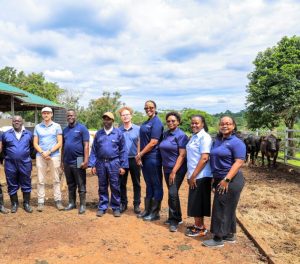
A group photo at Prime Agro Farm in Zirobwe during the launch of Best Farmers 2025.
To drive financial sustainability, FEAT will facilitate UGX 100 billion in financial linkages while introducing a Catalytic (Revolving) Fund Facility to support early-stage enterprises that are not yet ready for commercial credit. Complementing finance, participants will access capacity building in leadership, governance, financial literacy, marketing, price risk management, and climate-smart agriculture through Management Business Advisors, AgriTech experts, and digital platforms such as dfcu Foundation SOMA e-learning platform and the Bean Book tool for coffee exporters.
Mabel Ndawula, Executive Director of dfcu Foundation, said:
“At its heart, FEAT is a collaborative effort to unlock real opportunities for farmers and entrepreneurs through access to finance, markets, and skills. The combined strength of Rabo Foundation’s global expertise and dfcu’s deep local commitment ensures that smallholder farmers and SMEs can move from subsistence to prosperity, driving inclusive growth and resilient rural economies.”

Charles Mudiwa, dfcu Bank Chief Executive Officer.
Charles Mudiwa, CEO of dfcu Bank, added:
“Agriculture remains the backbone of Uganda’s economy, and supporting its transformation is central to dfcu’s purpose of building better lives and businesses. Through FEAT, we are not only expanding access to finance but also investing in the skills, technologies, and partnerships that make agribusiness more competitive, resilient, and inclusive. This program reflects our long-term commitment to empowering Uganda’s farmers and positioning agriculture as a driver of sustainable national growth.”
Sonja Timmer, Lead Impact Finance, Africa at Rabo Foundation, noted:
“The FEAT program builds on our longstanding partnership with dfcu Foundation, whose team brings deep local expertise in Uganda’s agribusiness sector. It reflects our shared belief that entrepreneurship in smallholder value chains is key to sustainable growth. FEAT is more than a program: it aims to be a catalyst for change, equipping agri-entrepreneurs and farmers with training, tools, and financial solutions to scale their businesses sustainably and improve livelihoods.”
Why FEAT Matters
Source: The CEO – https://www.ceo.co.ug/dfcu-foundation-launches-the-feat-program-to-empower-agribusinesses-and-drive-inclusive-economic-growth-in-uganda/

dfcu Bank has expanded its agricultural operations through a rebranded foundation and dedicated segment, as Uganda’s farming sector continues to grapple with financing gaps and post-harvest losses.
The bank’s Agriculture Segment, alongside the newly rebranded dfcu Foundation, formerly the Agribusiness Development Centre has trained over 27,000 farmers and worked with 885 enterprises across the country. The foundation reports that 54% of supported businesses are women-led, with more than 40,000 Ugandans receiving direct benefits.
“Agriculture is the soul of Uganda’s economic resilience. Our role is to empower farmers, cooperatives, and agribusinesses with the tools, skills, and financing they need to thrive,” said Alex Madolo, Head of Agriculture at dfcu Bank. “We see farmers not just as clients, but as partners in national transformation.”
Despite these interventions, significant obstacles remain in a sector that employs 70% of Uganda’s population. Post-harvest losses continue to reach 40% of produce, while climate shocks and limited access to finance constrain growth for smallholder farmers.
According to the bank’s 2024 Annual Report, dfcu disbursed UGX 11.2 billion specifically for women entrepreneurs in agriculture last year. The foundation has facilitated 2,112 agribusiness jobs and indirectly impacted an additional 100,000 people through market access improvements.
The bank has identified three focus areas: digital agriculture finance through mobile platforms, youth engagement in agribusiness, and expanding women’s access to agricultural financing. These initiatives represent dfcu’s response to persistent challenges in a sector that remains central to Uganda’s economy.
“We are innovating around these challenges designing seasonal loan products, promoting group lending, and partnering with insurers to protect farmers against climate risks,” Madolo explained. “When farmers grow, Uganda grows. No farmer should be left behind.”
The transition from the Agribusiness Development Centre to the dfcu Foundation signals the bank’s continued investment in agricultural development, as the 61-year-old institution seeks to balance commercial banking operations with development objectives in Uganda’s primary economic sector.
Source: The CEO – https://chimpreports.com/dfcu-bank-targets-agricultural-finance-as-sector-faces-persistent-challenges/